
The short answer
Indoor air quality service means inspecting the filters, ducts, ventilation, and humidity control tied to your HVAC system, then fixing what is causing dust, odors, or stuffy air. Many problems are solved with repairs and better filtration, and added equipment is recommended only when the inspection shows it will help.
The air inside your home moves through your HVAC system many times a day. If the filter is clogged, the ducts are leaking, or the humidity is off, you notice it as dust, stale smells, stuffy rooms, or allergies that flare up indoors. Liberty HVAC Services helps homeowners in Los Angeles and nearby cities find out what is actually affecting their indoor air and fix it at the source. We look at your filtration, ductwork, ventilation, and humidity together, then explain what we found in plain terms so you can decide what makes sense for your home.
Signs Your Home Needs Indoor Air Quality Service
Los Angeles has dry summers, mild winters, and fall Santa Ana winds that can push hot, dusty air into neighborhoods for days at a time. Inland and valley homes also run their air conditioning hard through the summer, which means more air passing through filters and ducts. Over time, small problems in the system show up as changes you can see, smell, or feel.
These are common signs that your indoor air deserves a closer look:
- Dust builds up on furniture soon after you clean, or you see dust around supply vents
- Musty, stale, or burning smells when the heat or air conditioning turns on
- Allergy or sinus symptoms that feel worse indoors than outside
- Rooms that feel stuffy, or air that feels very dry, especially during Santa Ana conditions
- Filters that look dirty well before you expected to change them
- Visible debris, discoloration, or moisture around vents, the air handler, or the drain pan
- Some rooms that never seem to get enough airflow
What We Check During an Indoor Air Quality Inspection
Indoor air problems rarely have a single cause, so we inspect the parts of your system that work together to clean and move air. The goal is to find where dust, moisture, or odors are coming from instead of guessing.
Depending on your home and system, our inspection typically covers:
- Air filter size, fit, and rating, including gaps around the filter rack that let air bypass it
- Return and supply ducts for leaks, disconnected sections, crushed runs, and dust buildup
- Return air pathways, including returns in attics or garages that may pull in unfiltered air
- The evaporator coil and blower wheel, which collect dirt that reduces airflow and can cause odors
- Condensate drain pan and line for standing water, clogs, or signs of microbial growth
- Airflow at registers in different rooms
- Humidity and ventilation, including how fresh air enters the home
- Any existing air cleaners, UV lights, or purifiers to confirm they are working as intended
Repair vs. Replace: Your Options
Many indoor air quality problems can be solved without new equipment. A properly sized filter that actually seals in its slot, sealed duct joints, a cleaned coil and blower, and a clear condensate drain often make a noticeable difference on their own. We start with these fixes whenever they address the cause.
When repairs are not enough, we may suggest adding or upgrading equipment. We will explain why a specific option fits your home and what it will and will not do. Common options include:
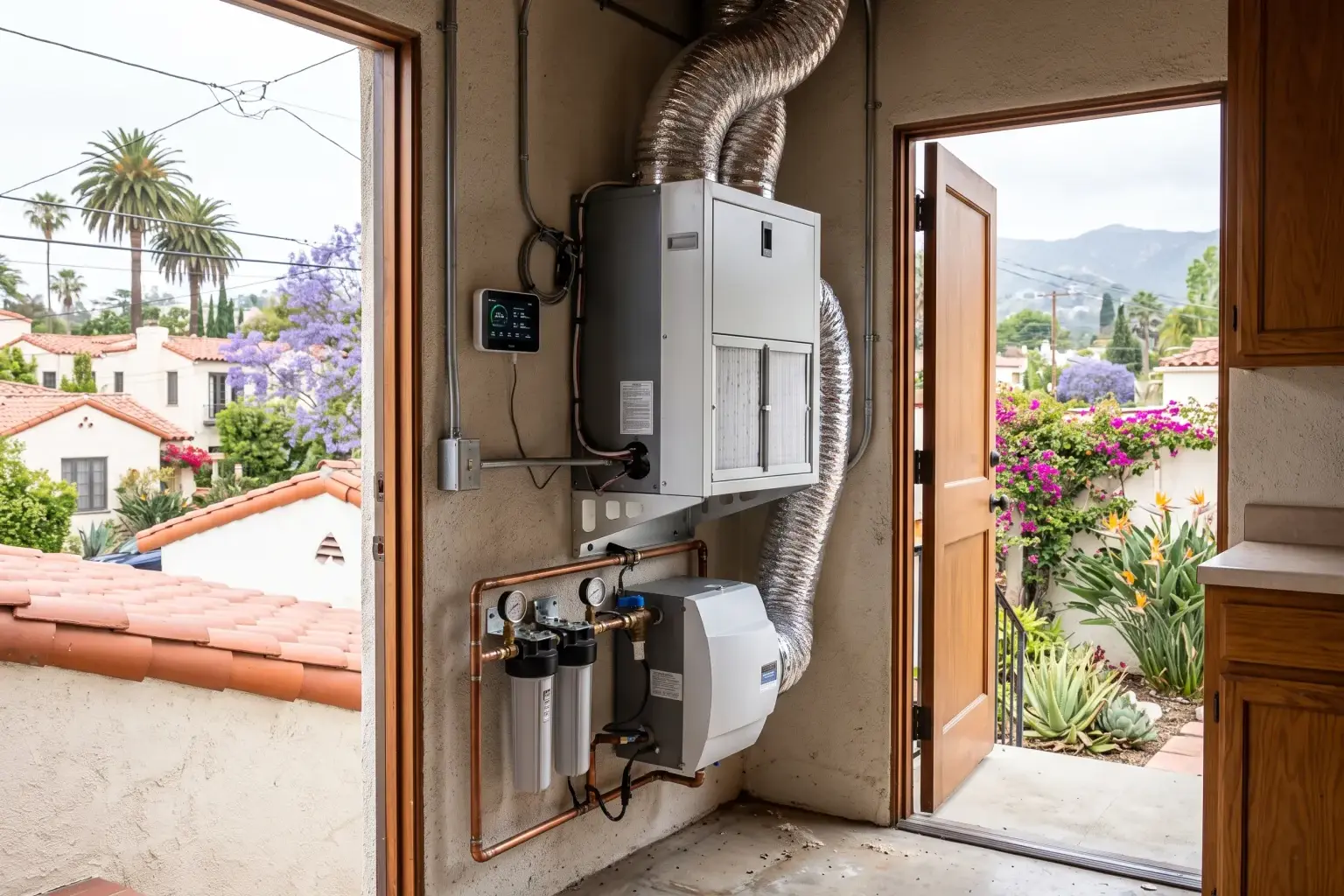
- Upgrading to a media filter cabinet that holds a deeper, higher-efficiency filter without choking airflow
- Repairing or replacing damaged duct sections, or sealing leaks at joints and boots
- Cleaning the coil, blower, and drain system to remove buildup
- Adding a whole-home air cleaner or UV light where the inspection supports it
- Improving ventilation so stale indoor air is exchanged with filtered outdoor air
- Replacing an aging system when worn components and poor airflow are the root of the problem; if that system includes a gas furnace, we review the current South Coast AQMD furnace emission rules with you, since the district sets and revises its requirements
What Affects the Cost of Indoor Air Quality Work
Every home is different, so we give you a clear quote after we inspect the system. The scope of work depends on what we find, not on a one-size package.
Factors that typically affect the cost include:
- How many problems the inspection uncovers and how they connect
- The size of your home and the length and layout of your ductwork
- Access to ducts and equipment, such as tight attics, crawlspaces, or closets
- The condition of existing ducts, and whether they can be sealed or need replacement
- The type of filtration, air cleaning, or ventilation equipment you choose
- Whether your HVAC system needs modifications to accept new equipment
- Electrical or drain work required for added components
How an Indoor Air Quality Visit Works
When you contact us, we ask what you are noticing, such as dust, smells, allergies, or uneven rooms, and when it happens. That helps our technician focus on the right areas when they arrive.
During the visit, the technician walks through your home, inspects the equipment and accessible ductwork, checks filters and drainage, and measures airflow and humidity where useful. We show you what we find, including photos when parts are hard to see, and walk you through repair options and any equipment that may help. You get a written quote before any work begins, and you decide what to move forward with. After the work is done, we explain how to maintain it, including how often to check or change your filter based on your home and system.