
The short answer
A ductless mini-split is a good fit for Los Angeles homes without ducts, rooms that stay too hot or cold, additions and ADUs, or homeowners replacing an aging furnace with an electric heat pump. We assess each room, your electrical panel, and the line routes before sizing a system. We also confirm which utility rebates apply to your address before quoting.
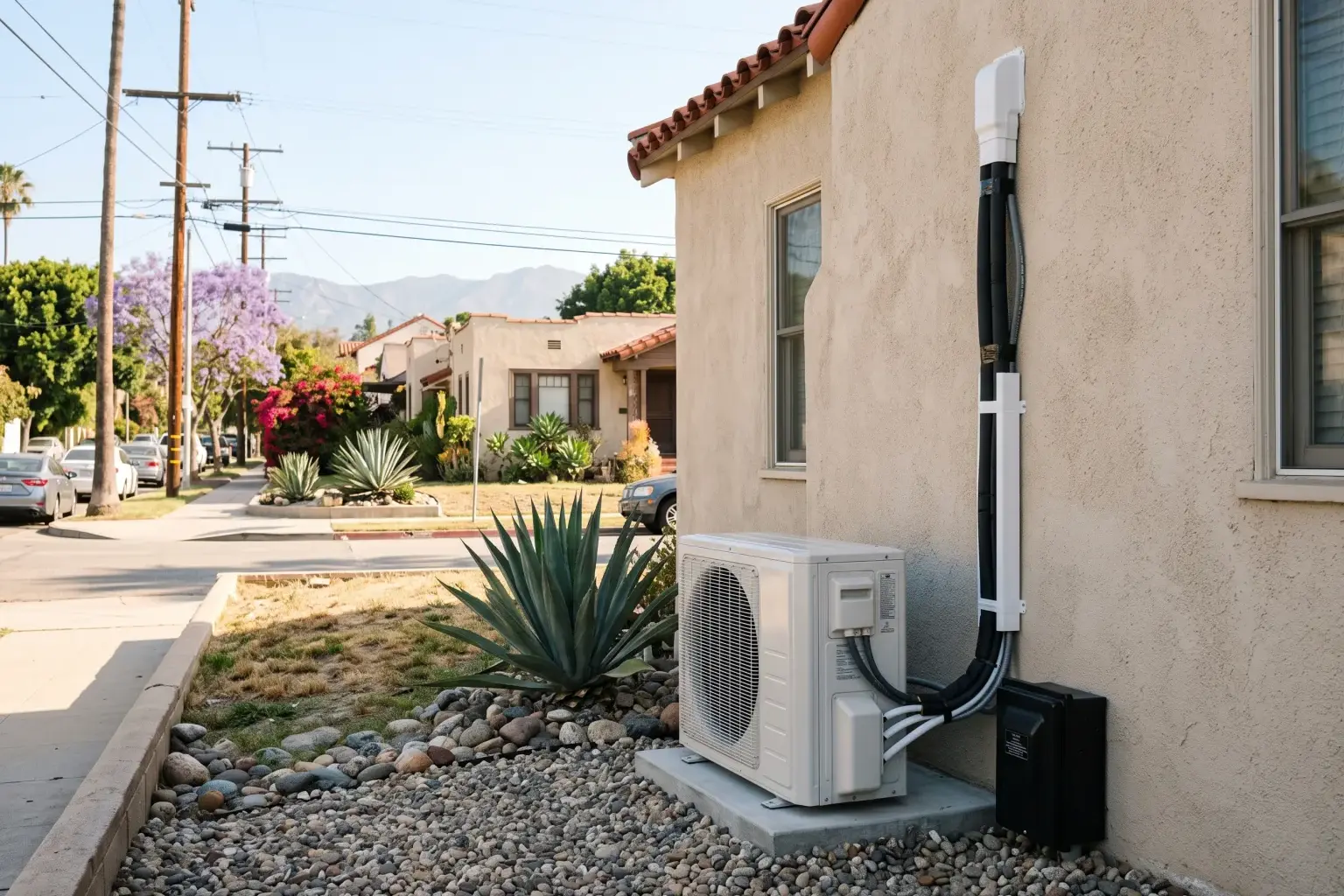
A ductless mini-split heats and cools individual rooms without ductwork. An outdoor heat pump connects to one or more indoor units through a small line set that passes through the wall. Many Los Angeles homes have spaces that central systems don't serve well, such as older bungalows without ducts, converted garages, ADUs, and upstairs bedrooms that never cool down. For those spaces, a mini-split is a practical way to get comfort where you spend your time. Liberty HVAC Services installs ductless systems in Los Angeles and nearby cities. We also service existing mini-splits that aren't working the way they should. Here's how we handle the job from start to finish.
Signs a Ductless System Makes Sense
Los Angeles summers are dry. Inland neighborhoods and the valleys run much hotter than areas near the coast, and fall Santa Ana winds can bring hot, dry spells late in the season. If parts of your home stay uncomfortable through those stretches, a mini-split is often worth a look.
Mini-splits can also replace an aging gas furnace. South Coast AQMD Rule 1111 limits NOx emissions from natural-gas fan-type central furnaces sold and installed in our region, and the district has been amending the rule toward zero-emission requirements. If you're planning a furnace replacement, check the current rule, because the district sets and revises the compliance dates. A heat pump, including a ductless mini-split, is one of the options we can walk you through.
- Your home has no ductwork, and window units or portable ACs are loud, inefficient, or block your windows.
- One room or floor stays much hotter or colder than the rest of the house.
- You added a room, converted a garage, or built an ADU that your existing system can't reach.
- Your existing ducts are leaky, undersized, or run through a hot attic, and replacing them would be disruptive.
- You rely on wall heaters or space heaters in winter and want one system that both heats and cools.
- Your furnace is nearing replacement, and you're weighing an electric heat pump instead.
- Your existing mini-split blows weak air, drips water, ices up, or shows error codes.
What We Check Before Recommending a System
A good ductless installation starts with a careful look at the house, not a guess based on square footage. During the assessment, we look at:
From there, we size each indoor unit and decide between a single-zone and a multi-zone setup. An oversized system short-cycles and does a poor job of controlling humidity. An undersized one leaves rooms uncomfortable on the hottest valley afternoons.
- Room sizes, ceiling heights, window area, and sun exposure for each space you want to heat or cool.
- Insulation and air leaks, especially in older homes and converted spaces.
- Your electrical panel's capacity, and whether a dedicated circuit is available or needs to be added.
- Where the outdoor unit can sit with good airflow, a stable base, and reasonable clearance from windows and neighbors.
- The route for the line set and condensate drain, and whether you'll need a condensate pump.
- Indoor unit locations that don't blow directly on beds or seating and are easy to reach for filter cleaning.
- How you use each room, so we can recommend wall-mounted, ceiling cassette, floor console, or concealed ducted units.
Repair vs. Replace for Existing Mini-Splits
If you already have a ductless system, we diagnose the problem before recommending anything. Many problems are fixable. Common examples include clogged filters and dirty coils, blocked condensate lines that cause drips, sensor or control board faults, refrigerant leaks at the flare connections, and failed fan motors.
Replacement starts to make sense when the compressor has failed on an older unit, leaks keep coming back, parts are hard to find, or the system was never sized correctly for the space. We lay out both paths, explain what each involves, and let you decide.
Sometimes the right answer is in between. We might keep a working outdoor unit and replace a single indoor unit, or add a new single-zone system for a room the old one never served well.
What Affects the Cost
We quote every ductless project after an assessment, because the price depends on the details of your home. The main factors are:
Rebates can offset part of the cost. LADWP residential electric customers can apply for Consumer Rebate Program rebates on qualifying heat pump systems, with the amount based on the unit's SEER2 and HSPF2 ratings. You file the application after the equipment is purchased and installed, within 12 months of purchase. Many homes outside the City of Los Angeles are served by Southern California Edison instead, so the rebates available to you depend on your utility. We confirm the current offer before quoting it. The federal Energy Efficient Home Improvement Credit (25C) covered only qualifying heat pumps placed in service before December 31, 2025, so it isn't available for new installations.
- The number of zones and indoor units, and the type of indoor units you choose.
- Equipment capacity and efficiency ratings (SEER2 and HSPF2).
- Line set length, and how hard the route is through walls, attics, or crawlspaces.
- Electrical work, including new circuits, disconnects, or panel upgrades.
- How the outdoor unit is mounted, such as on a pad, a wall bracket, or a roof stand.
- Condensate pumps, line set covers, and patching or finish work.
- Permits required by your city.
How an Installation Visit Works
Here's what to expect from your first call to a finished installation.
A single-zone installation is often finished in a day. Multi-zone projects usually take longer, depending on the line set routes and the electrical work involved.
- Assessment: A technician walks through the house with you, takes measurements, checks your electrical panel, and talks through which rooms matter most.
- Proposal: You get a written recommendation with equipment options, indoor unit locations, and the scope of any electrical and finish work.
- Permits and scheduling: We pull any required permits and set an installation date.
- Installation: We mount the indoor and outdoor units, drill a small opening for each line set, run the refrigerant and drain lines, and complete the wiring.
- Startup: We pressure-test and evacuate the lines, charge the system, and confirm that each zone heats and cools as it should.
- Walkthrough: We show you how to use the remote, explain the modes, show you how to clean the filters, and leave the work area clean.