The short answer
If your furnace is aging, needs frequent repairs, or heats your home unevenly, replacement may cost less over time than continued repairs. In the Los Angeles region, check the current South Coast AQMD furnace rules before you buy, and consider whether a heat pump fits your home and utility rebates.
Winters in Los Angeles are mild, but a furnace still has to start reliably on cool mornings and evenings, and an aging unit tends to fail when you need it. When it's time for a new one, the decision is about more than picking a model. Local air quality rules, the condition of your ductwork, the size of your home, and whether a heat pump would serve you better all shape the right choice. Liberty HVAC Services installs furnaces for homeowners in Los Angeles and nearby cities. This page covers the signs it's time to replace, what we inspect, how we weigh repair against replacement, what drives the cost, and what happens during a visit.
Signs You May Need a New Furnace
Furnaces rarely fail without warning. Most show gradual signs that repairs are becoming a losing game. Because Los Angeles winters are short, these problems can go unnoticed for months and then show up all at once on the first cold night of the season.
If you notice one or more of the signs below, it's worth having the system evaluated before it stops working completely.
- The furnace needs repairs every heating season, or the same part keeps failing
- Some rooms stay cold while others get too warm, even with the vents open
- The burner flame looks yellow or flickers instead of burning a steady blue
- You hear banging, rattling, or screeching when the system starts or runs
- The blower runs constantly, or the furnace turns on and off in short cycles
- Your gas bills rise even though your habits haven't changed
- You see rust, cracks, or soot around the cabinet or flue
- Your carbon monoxide alarm sounds, or someone in the home gets headaches or nausea when the heat is on
What We Check Before Recommending Anything
A new furnace is only as good as the system it connects to. Before we recommend equipment, we look at the whole picture so the new unit is sized correctly and works with your home instead of against it.
Many homes in the area have furnaces in attics, garages, or interior closets, and each location affects which equipment fits and how it must be vented. We note these details during the inspection so there are no surprises on installation day.
- Heat exchanger condition, including signs of cracks or corrosion
- Burners, ignition system, flame sensor, and gas valve
- Venting and flue condition and whether the current setup suits a new unit
- Ductwork for leaks, crushed sections, poor insulation, and undersized runs
- Return air paths and filter access
- Thermostat type and wiring
- Home size, layout, insulation, and window exposure for proper load sizing
- Electrical supply, in case a heat pump is worth considering
Repair or Replace: Your Options
Not every furnace problem means replacement. A failed igniter, a dirty flame sensor, or a worn blower motor can often be fixed, and the furnace can keep running safely. We tell you when a repair makes sense. Replacement becomes the better choice when the heat exchanger is cracked, when major parts fail repeatedly on an older unit, or when the system was never sized correctly for the home.
If you're replacing a gas furnace, local rules matter. South Coast AQMD Rule 1111 limits nitrogen oxide emissions from natural-gas fan-type central furnaces sold and installed in the Los Angeles region. The district has been amending the rule toward zero-emission requirements and sets and revises the compliance dates. We check the current version of the rule before recommending equipment, so the furnace you choose meets the requirements in place when it's installed.
Because of those changes, many homeowners also look at heat pumps, which heat and cool with one system. That can be a good fit in inland neighborhoods and valleys, where summers run much hotter than near the coast and fall Santa Ana winds bring hot, dry spells. A heat pump may also qualify for utility rebates, which we cover in the FAQ below. Whether a gas furnace, a heat pump, or a dual-fuel setup makes the most sense depends on your home, your ducts, and your electrical panel.
What Affects the Cost of Installation
Every installation is quoted after we see the home, because the details vary widely. These are the main factors that move the cost up or down:
- Equipment type: gas furnace, heat pump, or dual-fuel system
- Efficiency level and features such as variable-speed blowers or modulating burners
- Furnace location and how easy it is to reach, especially in tight attics
- Venting changes needed for the new unit or to meet current rules
- Ductwork repairs, sealing, or replacement
- Electrical upgrades if you switch to a heat pump
- Thermostat replacement or new wiring
- Permits and inspections required by your city
- Removal and disposal of the old equipment
How a Furnace Installation Visit Works
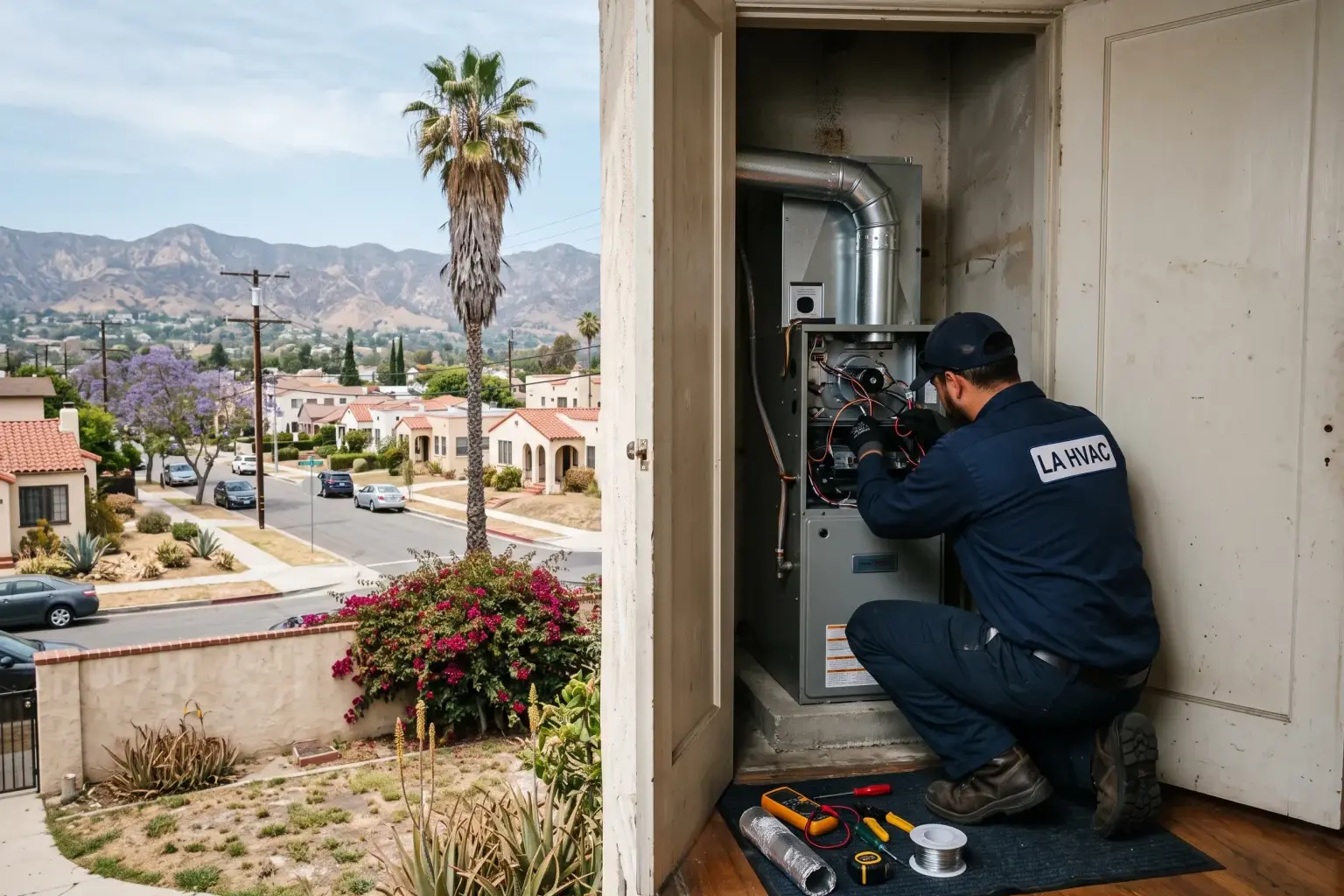
First, we schedule an in-home assessment. A technician inspects your current furnace, ducts, venting, and electrical setup, asks how your home heats and cools now, and listens to any comfort problems you've noticed.
Next, we explain what we found in plain language and lay out your options, including repair if it's realistic. You get a written quote that describes the recommended equipment and the work involved, so you can compare choices without pressure.
On installation day, we protect floors and work areas, disconnect and remove the old unit, and install the new equipment along with any venting, duct, or electrical work in the quote. We then start the system, check gas pressure, airflow, and safety controls, and confirm the thermostat works correctly.
Before we leave, we walk you through the new system, show you where the filter goes and how often to change it, and answer your questions. If a city inspection is required, we coordinate the timing with you.