
The short answer
You need duct cleaning when something specific is in the system, such as dust blowing from registers, pest debris, musty odors, mold, or leftover construction dust. We inspect the whole air path first, then recommend cleaning, repair, or replacement based on what we find. If your ducts don't need cleaning, we'll tell you.
Your ducts carry all the heated and cooled air through your home, but they sit out of sight in attics, crawlspaces, and wall cavities, so problems tend to go unnoticed. Liberty HVAC Services cleans, inspects, and repairs duct systems for homeowners in Los Angeles and nearby cities. We start by looking, not selling. Some ducts need a thorough cleaning, some need sealing or repair, and some are fine as they are. This page explains how to tell the difference and what to expect when we come out.
Signs Your Ducts Need Attention
Most homes don't need duct cleaning on a routine schedule. It makes sense when something has gotten into the system or when the ducts have gone a long time without anyone looking at them. In Los Angeles, dry summers, fall Santa Ana winds, and long stretches of air conditioning in hotter inland neighborhoods and valleys can push a lot of fine dust through a system. Watch for these signs:
If you've just moved into an older home and don't know the system's history, an inspection is a reasonable first step even without obvious symptoms.
- Dust or debris blowing out of supply registers when the system starts
- Dark buildup on register covers or on the ceiling and wall around them
- A musty or stale smell when the heat or air conditioning runs
- Signs of rodents or insects, such as droppings, nesting material, or chewed duct liner
- Recent remodeling, drywall work, or sanding while the system was running
- Visible mold on duct surfaces or around the indoor coil
- Filters that clog much faster than they used to
What We Check
Dirty ducts are often a symptom of a problem somewhere else, so we look at the whole air path before recommending anything.
Where we can't see directly, we use a camera. We show you the footage and photos so you can judge the condition yourself.
- Supply and return registers, grilles, and the return air path
- Filter size, fit, and condition, including gaps that let air bypass it
- Duct runs in the attic, crawlspace, or garage for crushed, kinked, or disconnected sections
- Joints and seams for leaks, and the condition of any tape or mastic sealing them
- Flex duct liner and insulation for tears, sagging, or pest damage
- The blower, indoor coil, and drain pan, since buildup there spreads through the ducts
- Airflow at each room, to find rooms that run noticeably hotter or colder
Clean, Repair, or Replace
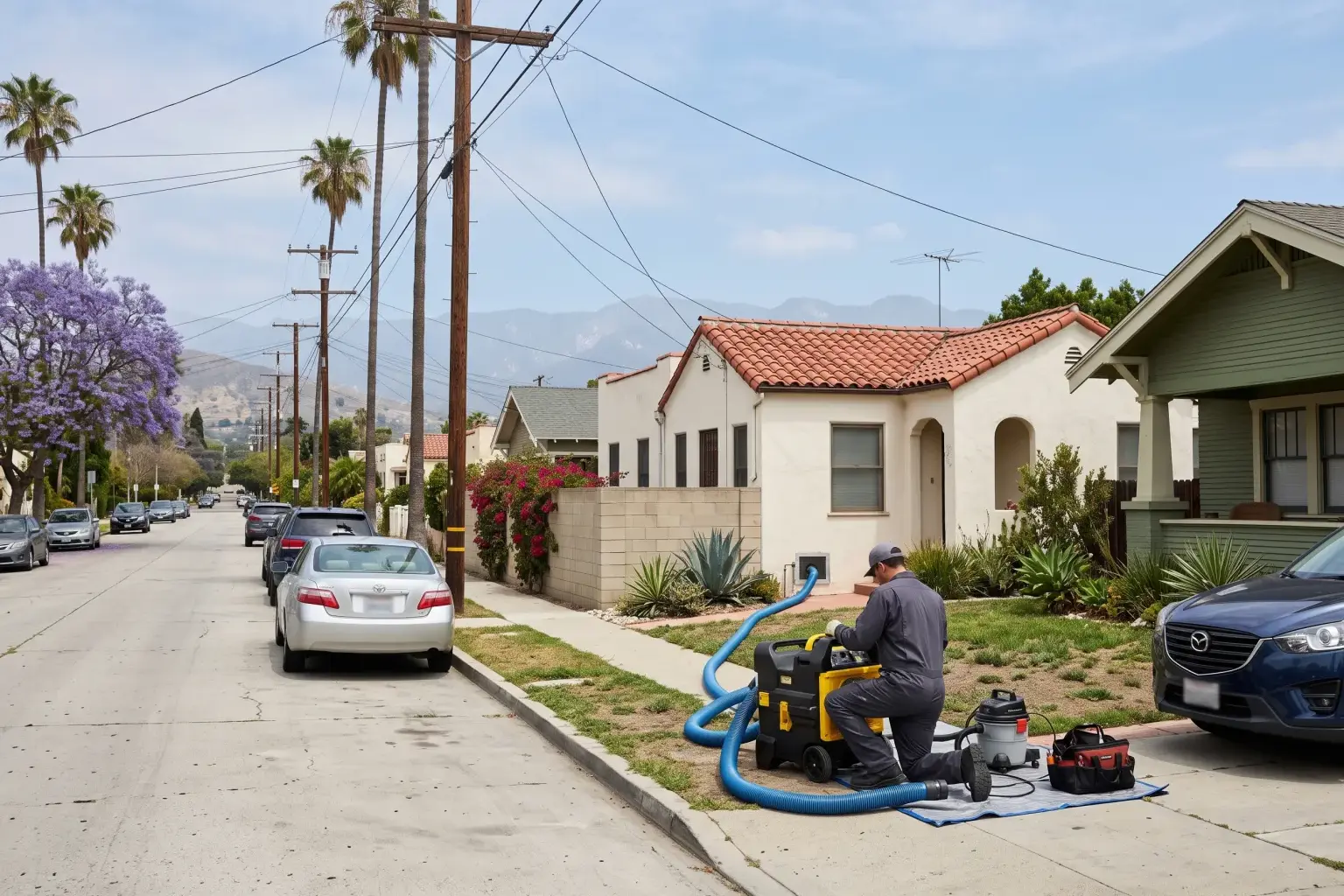
Cleaning is the right choice when the ducts are in good shape and only the inside is dirty. We put the system under negative pressure to pull loose material out while brushes or air whips knock debris off the duct walls. We also clean the registers and the parts of the air handler we can reach. Cleaning the ducts while leaving a dirty blower or coil in place accomplishes little, so we handle those during the same visit when they need it.
Repair makes sense when the ducts are mostly sound but have specific problems, such as a disconnected run in the attic, leaky joints, a section crushed behind stored boxes, or torn liner. Air that leaks into an attic never reaches your rooms, so sealing and reconnecting ducts often improves comfort more than cleaning alone.
Replacement is worth considering when flex duct has deteriorated, insulation is falling apart, pests have contaminated large sections, or the layout doesn't move enough air. Porous duct liner with mold growth usually can't be cleaned well and is better replaced. If you're also planning to replace your furnace or air conditioner, that's a good time to evaluate the ductwork, because new equipment works best with ducts sized for it.
Furnace replacements in the Los Angeles region fall under South Coast AQMD rules that limit furnace emissions. The district has been amending those rules toward zero-emission requirements and sets the compliance dates, so check the current rule if you're comparing a new gas furnace with a heat pump. Heat pump rebates depend on whether LADWP or Southern California Edison serves your address, and we confirm the current offer before quoting it.
What Affects the Cost
We give you a written quote after the inspection, not before. These are the main factors:
We don't add services you didn't ask for. If your ducts don't need cleaning, we'll say so.
- The number of supply and return registers and the total length of duct
- Where the ducts run and how easy they are to reach, since tight attics and crawlspaces take longer
- Duct material, because sheet metal, duct board, and flex duct are handled differently
- How much buildup there is, and whether pests or mold are involved
- Whether the blower, coil, or drain pan also needs cleaning
- Any repairs, sealing, or sections that need replacement
- How many separate heating and cooling systems the home has
How a Visit Works
Scheduling: We ask what you're noticing, roughly how old the home is, and where the system and ducts are located. That way the technician brings the right equipment.
Inspection: The technician walks the system with you. They check the registers, the air handler, and the duct runs they can reach, then explain what they found and what they recommend.
The work: If you approve cleaning, we cover floors and furniture near the work areas, seal off registers, connect the negative-pressure equipment, and clean the system one section at a time. When we have the parts on hand, repairs and sealing usually happen during the same visit. Most cleaning jobs take part of a day. Larger homes and homes with more than one system take longer.
Wrap-up: We can install a fresh filter, run the system to check airflow at each room, and walk you through what was done with before-and-after photos.